en/ru
Beneath the Concrete Skin is a site-specific performance that turns the cold space of the Feldstraße war-bunker into a place for memory, sound and movement. Created by Maria Markina and Berlin-based choreographer Vera Shchelkina, it was shown as part of the Stitched Connections exhibition, curated by Dmitry Vilensky at Hajusom.
The work grew out of a close collaboration between the artists and performers: Azadeh Rahbar, Mariya Gyurova, Ksenia Vidyaykina, Alexey Markin, Taisiia Sapurina, Zoe Champagne, and Olga Egorova.
During a series of workshops, Markina developed a detailed sound concept that guided the audience through different parts of the bunker. The performance began in stairwells, where the performers could not be seen. Their voices called out to each other, exploring the feeling of being both distant and connected.
At the glass entrance, the group moved into a shared rhythm of breathing. Working in pairs, they focused on “scars”—both physical and emotional—looking at ideas of vulnerability, care, and healing.
In the corridors, the performers used their voices and bodies to recreate the “sound of the bunker.” At the same time, they made the space feel human and alive. The performance ended in a circle, where individual actions came together as a collective sound piece that echoed through the building and the bodies present.
Beneath the Concrete Skin — это сайт-специфик перформанс, который превращает холодное пространство военного бункера на Фельдштрассе в место памяти, звука и движения. Созданный Марией Маркиной и берлинской хореографкой Верой Щёлкиной, он был представлен в рамках выставки Stitched Connections, куратором которой выступил Дмитрий Виленский в пространстве Hajusom.
Работа возникла в результате тесного сотрудничества между художниками и перформерами: Азадех Рахбар, Марией Гюровой, Ксенией Видяйкиной, Алексеем Маркиным, Таисией Сапуриной, Зои Шампань и Ольгой Егоровой.
В ходе серии воркшопов Маркина разработала детальную звуковую концепцию, которая проводит зрителя через разные части бункера. Перформанс начинается в лестничных пролётов, где исполнители остаются невидимыми. Их голоса перекликаются, исследуя ощущение одновременной дистанции и связи.
У стеклянного входа группа переходит к общему ритму дыхания. Работая в парах, участники обращаются к теме «шрамов» — как физических, так и эмоциональных, исследуя уязвимость, заботу и процессы исцеления.
В коридорах перформеры с помощью голосов и тел воссоздают «звук бункера». Одновременно они делают пространство более человеческим и живым. Перформанс завершается кругом, где индивидуальные действия складываются в коллективную звуковую композицию, которая отзывается эхом в здании и в телах присутствующих.
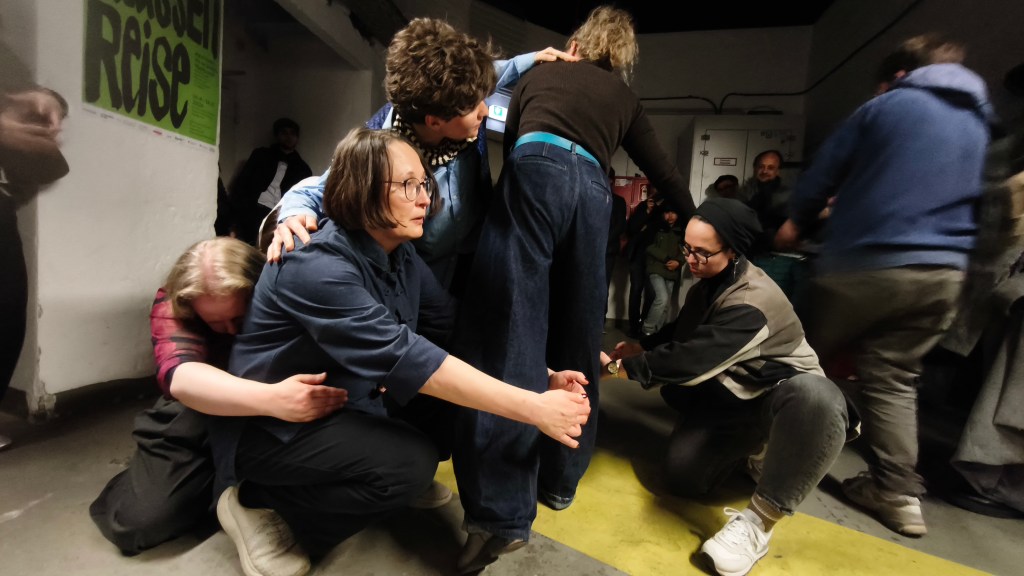
Foto: Dmitry Vilensky
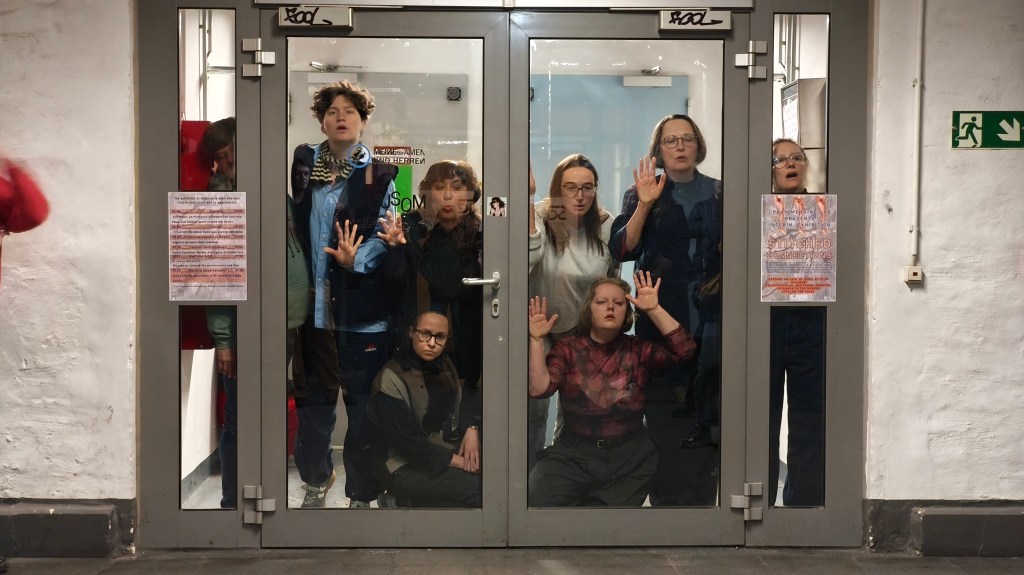
Foto: Dmitry Vilensky
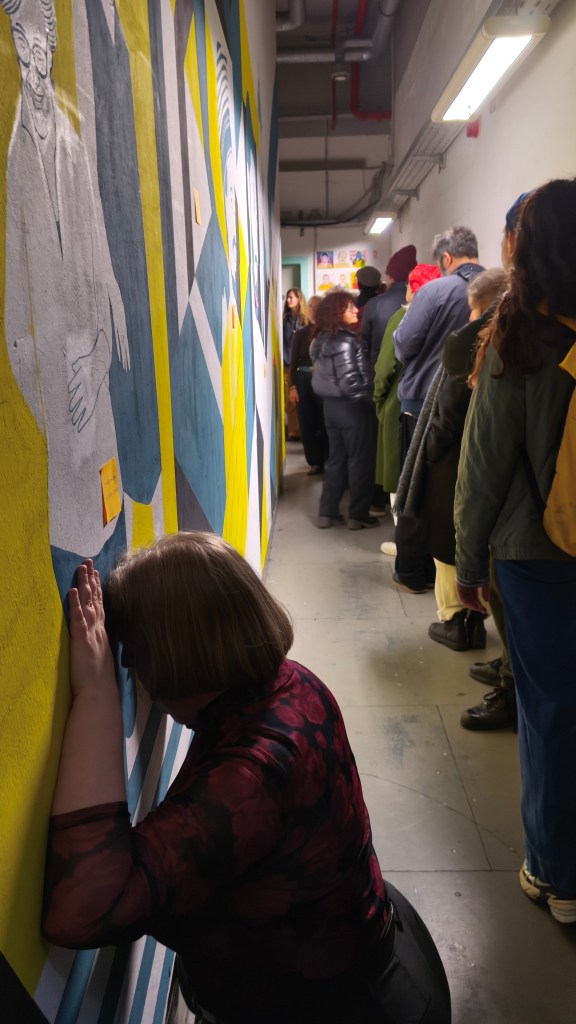
Foto: Dmitry Vilensky
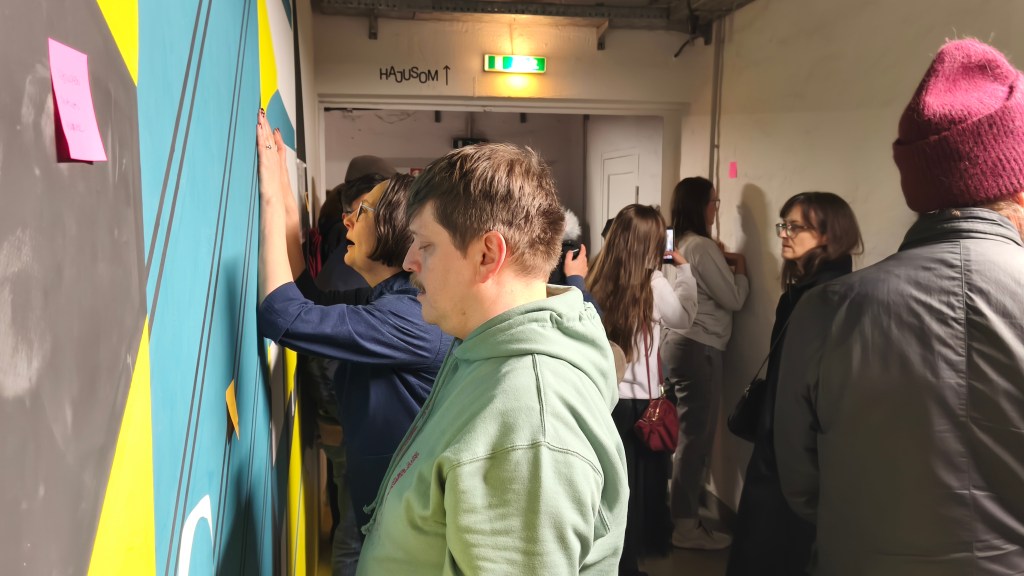
Foto: Dmitry Vilensky
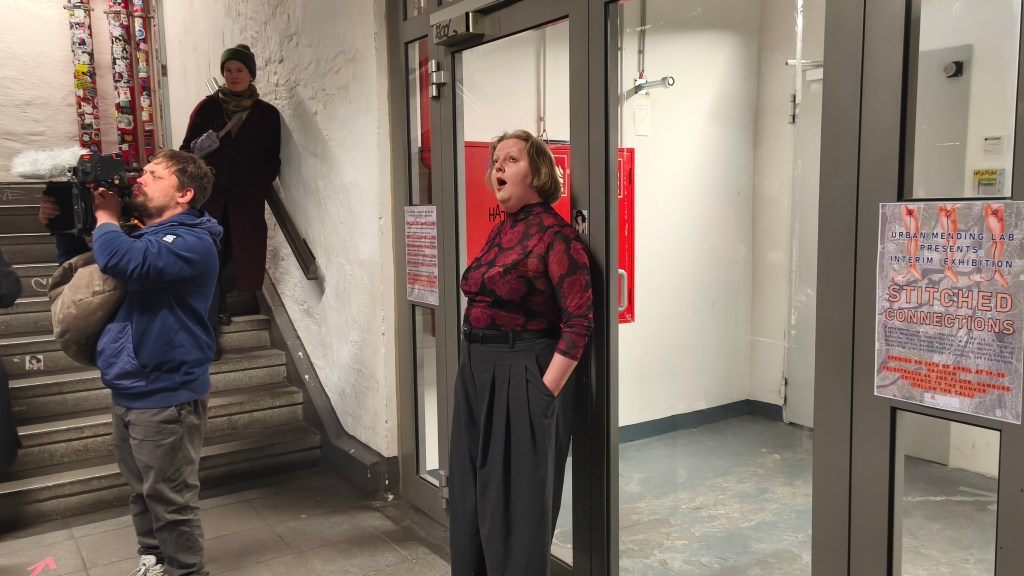
Foto: Dmitry Vilensky
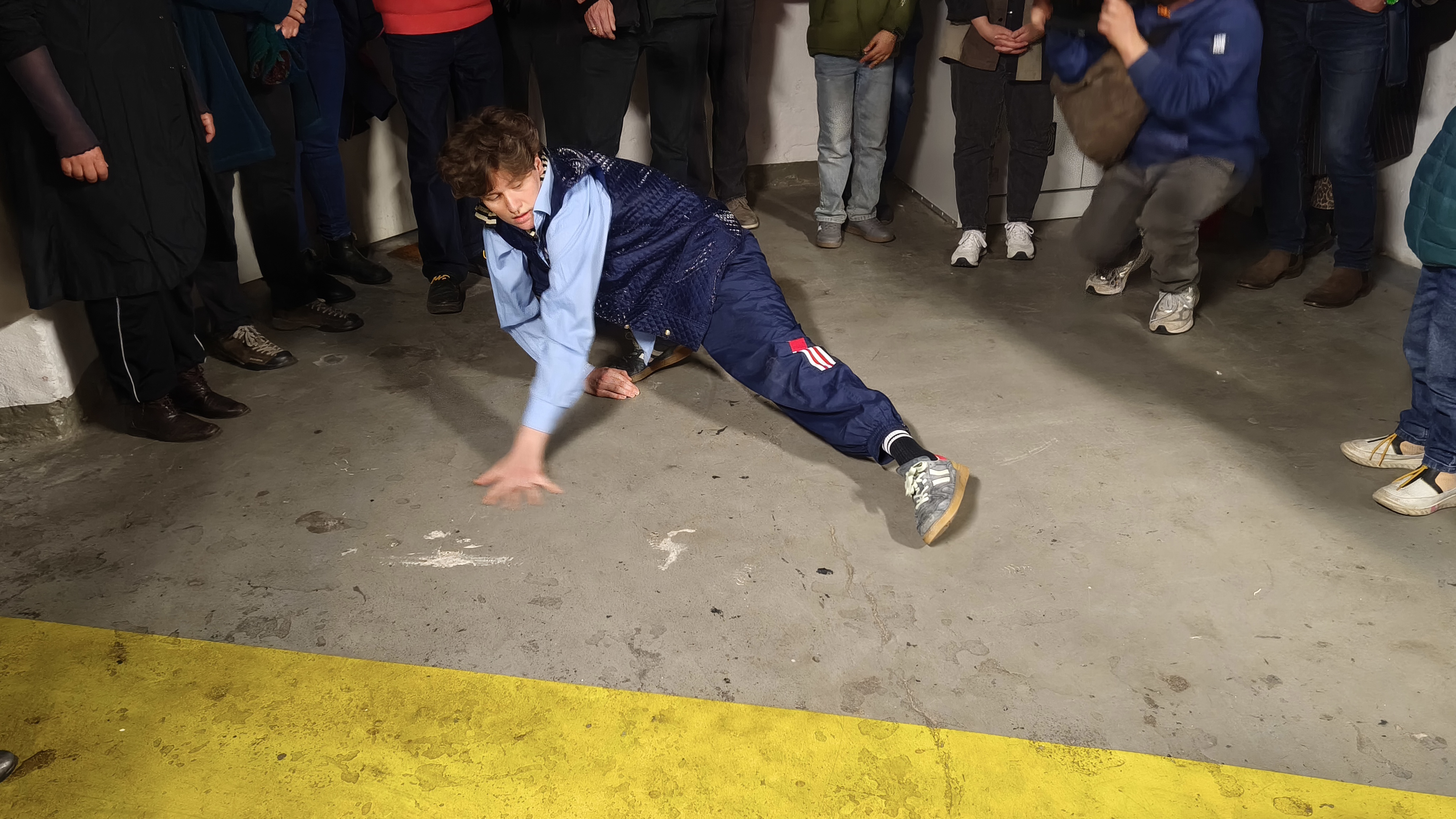
Foto: Dmitry Vilensky

